The open road may be calling again next spring, but before the temperatures drop, your camper needs a little attention now! Waiting until the first hard freeze to prepare your RV or camper can leave water systems, batteries, seals, tires, and the roof vulnerable to expensive damage.
The good news? Early winterization is a simple, practical way to protect your investment and make spring startup easier. Adding indoor storage provides another valuable layer of protection from snow, ice, wind, UV exposure, and moisture.
At 62 Sales, we help outdoor-loving families enjoy more freedom and fewer surprises. Whether you own a compact truck camper, a towable, or another RV, our family-owned team is here to help you get ready for the off-season!
Why You Should Winterize Before the First Freeze
A forecast can change quickly in Southern Indiana. One mild week can be followed by a cold snap, and a single overnight freeze may be enough to damage water trapped inside your camper.
Water expands when it freezes. That expansion can put pressure on plumbing lines, fittings, pumps, tanks, and water heaters. Even if your camper is parked close to home, an unexpected freeze can cause problems before you have time to react.
That’s why it is smart to schedule winterization when fall temperatures begin trending downward: not after the first freeze has already arrived.
Winterizing early helps you:
- Avoid rushing when cold weather arrives
- Protect hidden plumbing components
- Reduce the risk of freeze-related repairs
- Keep moisture from creating larger problems
- Store your camper with confidence
- Make spring camping preparation faster and easier
If you plan to use your camper during the colder months, your winterization strategy may look different. Follow your owner’s manual and consider professional guidance to ensure the system is prepared for your specific camping plans.

Early Winterization Checklist
Every RV and camper is different, so your owner’s manual should be your primary resource. However, these key areas deserve attention before your camper goes into storage.
1. Protect the Plumbing and Water Systems
Your camper’s water system is often the most vulnerable area during freezing weather. Freshwater lines, faucets, pumps, water heaters, outside showers, filters, and holding tanks may all contain residual water.
A thorough winterization typically includes:
- Draining the freshwater tank
- Draining and bypassing the water heater as directed
- Opening low-point drains
- Removing water from faucets and outside showers
- Draining the pump and filtration system
- Flushing or protecting plumbing lines with RV-safe antifreeze, when appropriate
- Emptying and cleaning wastewater holding tanks
Use products specifically designed for RV systems, and never substitute automotive antifreeze for RV-safe plumbing antifreeze. The wrong product can damage components and create safety concerns.
Some water can remain hidden in places that are easy to overlook. That’s why professional winterization can be worthwhile, especially if you are unfamiliar with your camper’s plumbing layout or want confidence that the job was completed correctly.
Learn more or schedule service with 62 Sales. We can help you prepare your camper before cold weather turns a small oversight into a major repair.
2. Check and Maintain the Battery
Cold temperatures can reduce battery performance, and a battery that is already low on charge may be more vulnerable during winter storage.
Before storing your camper:
- Check the battery’s charge
- Clean corrosion from terminals
- Inspect cables and connections
- Follow the manufacturer’s instructions for disconnecting or removing the battery
- Store removable batteries in a safe, appropriate location
- Use a proper maintainer when recommended
Your camper may also have parasitic loads that slowly drain the battery even when the main systems appear to be turned off. Alarms, control boards, clocks, and other electronics can continue using power.
A little battery care now can help you avoid a dead battery, shortened battery life, or frustrating troubleshooting when you are ready for your first spring adventure.
3. Inspect Seals, Windows, Doors, and Exterior Openings
Moisture is another major concern during the off-season. Before storage, inspect seals around:
- Windows
- Entry doors
- Roof vents
- Skylights
- Plumbing access panels
- Exterior storage compartments
- Roof-mounted accessories
Look for cracking, gaps, loose sealant, or areas where water may be able to enter. Small problems can become larger problems when moisture gets inside and repeated freeze–thaw cycles begin.
Do not automatically apply a new sealant over an old one without confirming the correct product and preparation method. Your owner’s manual or a qualified RV service professional can help you determine what needs to be cleaned, removed, repaired, or resealed.
4. Give the Roof a Careful Look
The roof protects your camper from the elements all year long. Before winter storage, inspect it for visible damage, pooling water, cracked sealant, or loose components.
Clear away leaves and debris, and make sure roof vents and openings are properly closed. If you notice a problem, address it before snow, ice, and moisture have an opportunity to make it worse.
Indoor storage helps shield the roof from direct exposure, but it does not eliminate the need for an inspection. Prevention is always easier than dealing with a leak after the interior has been damaged.
5. Protect the Tires
Your camper may sit in one place for several months, so tires deserve attention before storage.
Start with a visual inspection for cracking, uneven wear, or damage. Check tire pressure according to the manufacturer’s recommendations, and consider using tire covers to reduce UV exposure. Even during winter, sunlight can contribute to sidewall deterioration.
Depending on your camper and storage setup, you may also want to discuss weight distribution, leveling, and ways to reduce long-term stress on the tires. Follow the guidance provided by your camper and tire manufacturers.
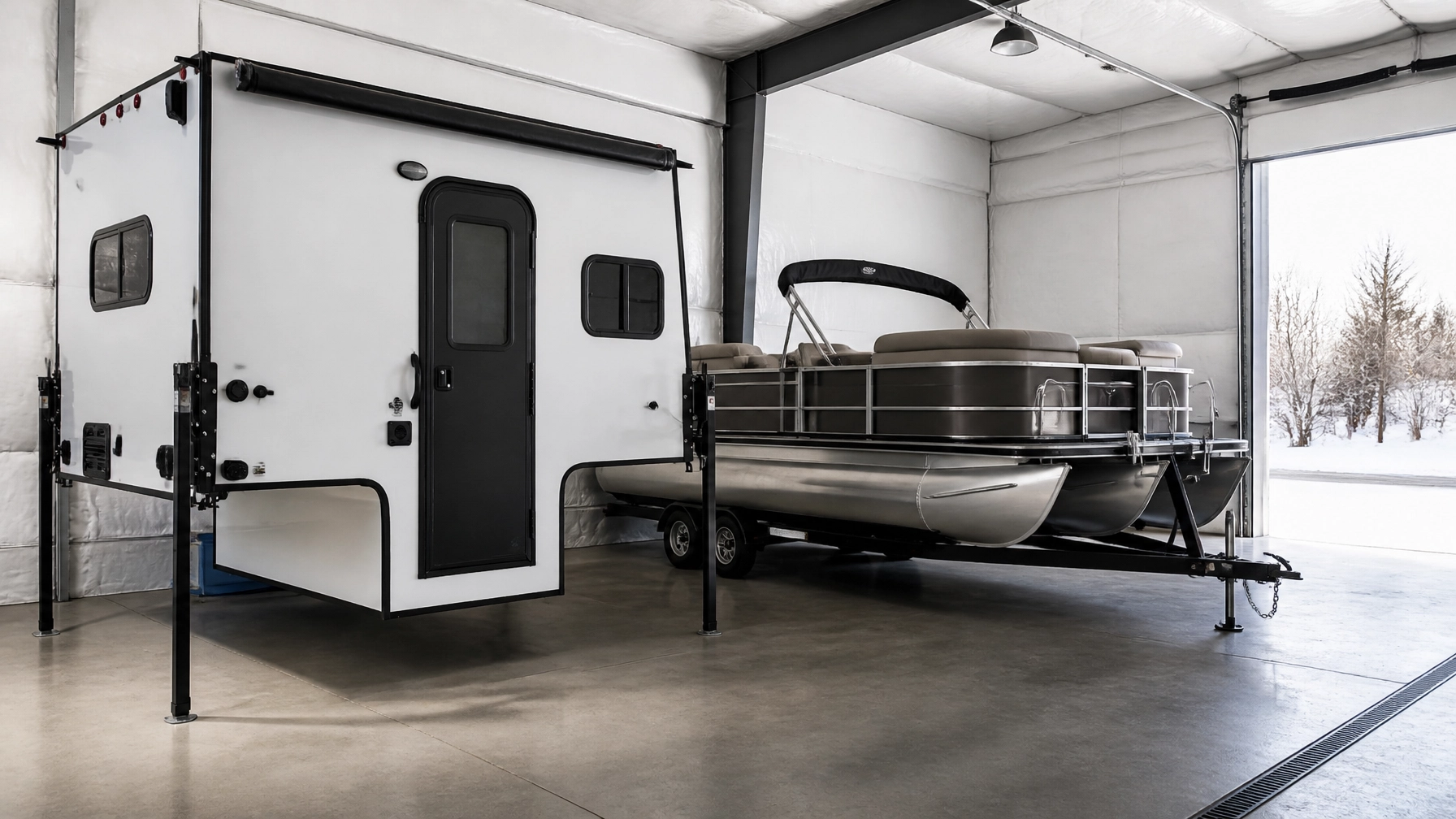
If you own a compact truck camper such as a TLRV, seasonal care is still important even though its smaller size can make it easier to handle. Smaller, simpler campers help us get back to basics and focus on the outdoors: but they still represent a valuable investment worth protecting!

Why Indoor Storage Adds Another Layer of Protection
Winterizing protects your camper’s internal systems. Indoor storage helps protect the entire unit from the weather outside.
Keeping your camper inside can help reduce exposure to:
- Freezing rain and snow
- Ice accumulation
- Strong winter winds
- Falling branches and debris
- Direct UV exposure
- Rain and surface moisture
- Repeated outdoor freeze–thaw conditions
Indoor storage can also help preserve exterior finishes, roof sealants, tires, and other components that slowly deteriorate when exposed to the elements. Most importantly, it gives your camper a clean, protected place to wait for the next season.
Remember: indoor storage does not replace winterization. If a storage building is not heated, temperatures inside may still fall below freezing. Winterize your camper before it goes inside so it remains protected throughout the season.
Store Your Camper at 62 Storage
Need a secure place for your RV, boat, or camper this winter? 62 Storage offers insulated indoor storage with spacious 30-foot and 45-foot units for recreational vehicles, boats, trailers, and more.
You’ll find 62 Storage just past 62 Sales on Highway 62 when you’re headed toward Madison, Indiana. The facility offers:
- 30-foot and 45-foot storage units
- 24/7 access
- Power
- Indoor protection from the elements
- Convenient access near 62 Sales
Storing your camper indoors can make your spring preparations easier, too. Instead of beginning the season by clearing snow, checking for storm damage, or worrying about moisture exposure, you can focus on inspecting your equipment, restocking supplies, and planning your next unforgettable adventure!
Visit 62RVstorage.com to learn more, ask about discounted storage rates, and make a reservation. No specific discount amount is required: just reach out to the 62 Storage team for current availability and pricing.
Protect Your Investment Before Cold Weather Arrives!
Your camper is more than a vehicle. It is the place where your family gathers around a campfire, watches sunsets, explores the open road, and makes memories together. Taking time to winterize early helps protect those future adventures.
Have a question about your camper’s winterization needs? We’re happy to help!
Contact 62 Sales at 812-720-3810 to call or text anytime and schedule professional camper winterization. You can also visit our service page or contact our team for assistance.
Then contact or visit 62 Storage to ask about discounted indoor storage rates and reserve your 30-foot or 45-foot unit.
Let’s beat the freeze, protect your investment, and keep your next adventure ready to go!
